Have you ever wanted to describe something brown in a more interesting way? Instead of simply saying, “The tree was brown,” you can make your writing more colorful by using a simile.
A simile compares one thing to another using words such as “like” or “as.”
For example, you might say, “The tree bark was brown like an old wooden door.” This gives the reader a clearer picture.
In simple terms, similes help readers see, feel, and imagine what you are describing.
They are useful in stories, poems, school assignments, captions, and everyday writing. Examples of similes can turn a plain sentence into something much more memorable.
Today, let’s explore 50 similes for brown. You will see their meanings, short explanations, and simple simple sentences.
These examples can also help you learn how to use similes in writing and create your own.
50 Similes for Brown
1. Brown Like Chocolate
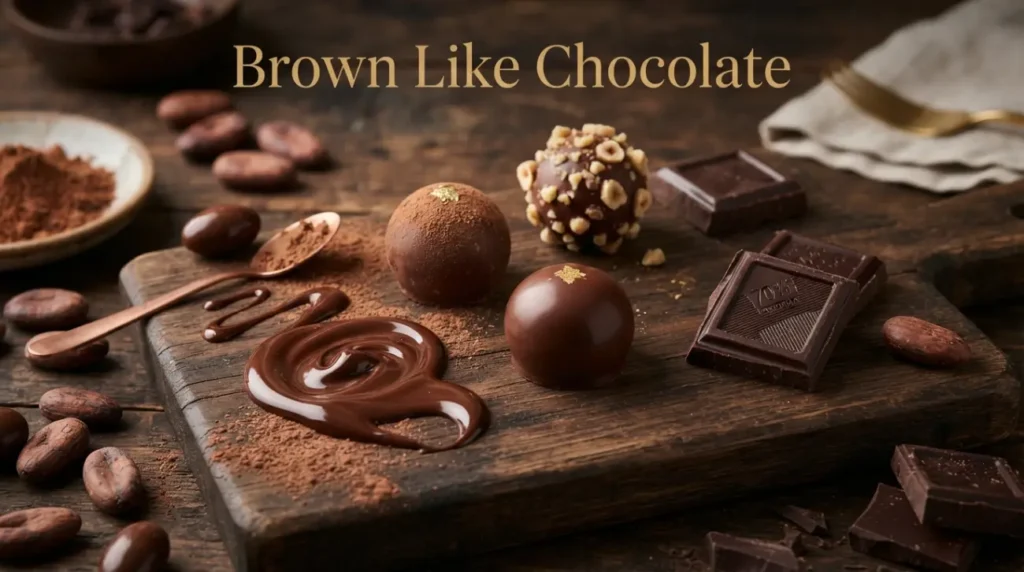
Simile: Her eyes were brown like rich chocolate.
Meaning: The brown color is deep, warm, and dark.
Explanation: This simile compares a brown color to chocolate because both can have a rich, warm shade.
Examples:
- His eyes were brown like chocolate.
- The puppy had fur brown like a chocolate bar.
2. Brown Like Earth
Simile: The soil was brown like fresh earth.
Meaning: The color is natural and earthy.
Explanation: Brown is often connected with soil, dirt, and nature.
Examples:
- The garden was covered in soil brown like earth.
- Her boots were brown like the ground after rain.
3. Brown as Coffee
Simile: The drink was brown as coffee.
Meaning: Something has a dark brown color.
Explanation: Coffee is a familiar example of a deep brown shade.
Examples:
- His eyes were brown as freshly brewed coffee.
- The wooden table was brown as coffee.
4. Brown Like an Old Tree
Simile: The fence was brown like an old tree.
Meaning: The color looks natural, aged, and earthy.
Explanation: Old trees often have rough brown bark, making them a useful comparison.
Examples:
- The cabin walls were brown like an old tree.
- The wooden gate looked brown like tree bark.
5. Brown as Cinnamon
Simile: Her hair was brown as cinnamon.
Meaning: Her hair had a warm, reddish-brown shade.
Explanation: Cinnamon has a warm brown color that works well for describing hair, wood, or clothing.
Examples:
- His hair was brown as cinnamon.
- The blanket was brown as a pile of cinnamon.
6. Brown Like a Chestnut
Simile: The horse had a coat brown like a chestnut.
Meaning: The color was warm and reddish brown.
Explanation: Chestnuts are known for their rich brown color.
Examples:
- Her hair was brown like a chestnut.
- The horse looked brown like a polished chestnut.
7. Brown as Mud
Simile: His shoes were brown as mud.
Meaning: The shoes were covered in or colored like muddy soil.
Explanation: Mud is a simple and familiar comparison for brown.
Examples:
- My boots were brown as mud after the walk.
- The children had hands brown as mud.
8. Brown Like a Wooden Table
Simile: The floor was brown like a wooden table.
Meaning: The floor had a natural wood-brown color.
Explanation: Wooden furniture often has warm shades of brown.
Examples:
- The desk was brown like a wooden table.
- The room had brown floors like an old table.
9. Brown as Autumn Leaves
Simile: The leaves were brown as autumn leaves.
Meaning: Something has a dry, warm, earthy brown color.
Explanation: Fallen autumn leaves often turn brown before winter.
Examples:
- The grass was brown as autumn leaves.
- Her scarf was brown as dry leaves.
10. Brown Like Toast
Simile: The bread was brown like warm toast.
Meaning: The color is golden-brown and slightly dark.
Explanation: Toast gives readers an easy picture of a warm brown shade.
Examples:
- The bread was brown like toast.
- The puppy’s fur was brown like a piece of toast.
11. Brown as a Bear
Simile: The bear’s fur was brown as a bear’s coat.
Meaning: Something is a natural, medium-to-dark brown.
Explanation: Brown bears provide a clear visual comparison.
Examples:
- His jacket was brown as a bear’s fur.
- The dog had brown hair like a bear.
12. Brown Like Tree Bark
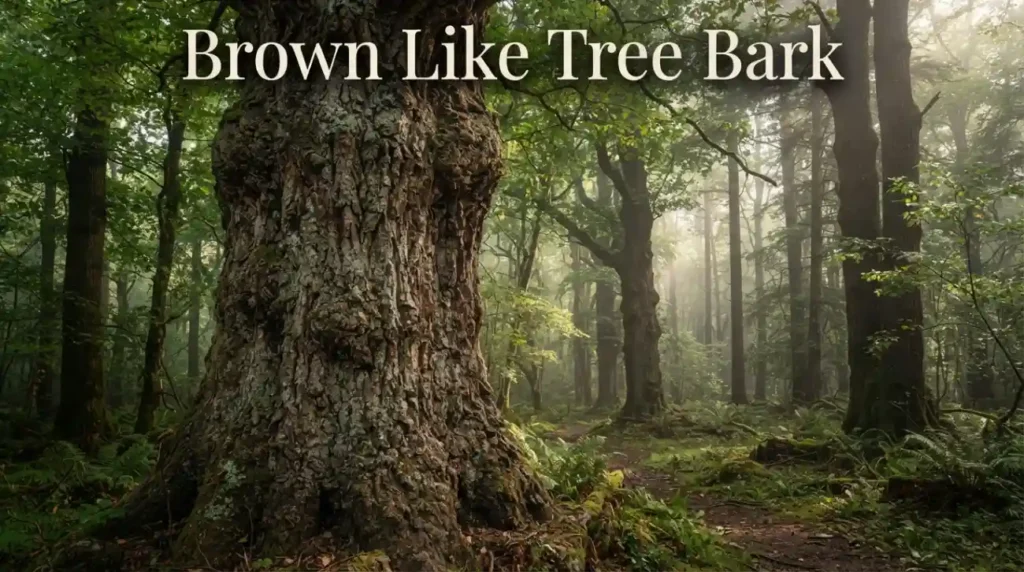
Simile: The wall was brown like tree bark.
Meaning: The wall had a rough, earthy brown color.
Explanation: Tree bark is one of the most natural examples of brown.
Examples:
- The old door was brown like tree bark.
- The chair looked brown like the bark of an oak tree.
13. Brown as Caramel
Simile: The sauce was brown as caramel.
Meaning: The color was warm, golden, and sweet-looking.
Explanation: Caramel can create a rich golden-brown image.
Examples:
- Her hair was brown as caramel.
- The cake had a crust brown as caramel.
14. Brown Like a Walnut
Simile: The table was brown like a walnut.
Meaning: It had a rich, deep brown color.
Explanation: Walnut wood is known for its dark and elegant brown shade.
Examples:
- The cabinet was brown like walnut wood.
- His desk was brown like a polished walnut.
15. Brown as a Potato
Simile: The soil was brown as a potato skin.
Meaning: The color was earthy and medium brown.
Explanation: Potato skins give a simple natural comparison.
Examples:
- The ground was brown as potato skin.
- The old paper looked brown as a potato peel.
16. Brown Like a Coffee Bean
Simile: Her eyes were brown like coffee beans.
Meaning: Her eyes were deep, dark brown.
Explanation: Coffee beans provide a strong image of dark brown.
Examples:
- His eyes were brown like coffee beans.
- The beads were brown like roasted coffee beans.
17. Brown as a Leather Bag
Simile: The bag was brown as old leather.
Meaning: The bag had a warm, slightly aged brown color.
Explanation: Leather often becomes a rich brown as it ages.
Examples:
- His boots were brown as old leather.
- The suitcase was brown like a leather bag.
18. Brown Like Dry Grass
Simile: The field was brown like dry grass.
Meaning: The color was pale, dusty, and earthy.
Explanation: Dry grass often turns brown during hot or dry weather.
Examples:
- The lawn was brown like dry grass.
- The hill looked brown like a field in summer.
19. Brown as a Wooden Chair
Simile: The chair was brown as polished wood.
Meaning: It had a smooth, natural brown color.
Explanation: Polished wood gives a warm and pleasant image.
Examples:
- The chair was brown as polished wood.
- The table looked brown like a wooden chair.
20. Brown Like a Clay Pot
Simile: The pot was brown like warm clay.
Meaning: The object had a natural reddish-brown shade.
Explanation: Clay pots are commonly brown, making them useful for visual descriptions.
Examples:
- The vase was brown like a clay pot.
- The walls were brown like dried clay.
21. Brown as Cinnamon Toast
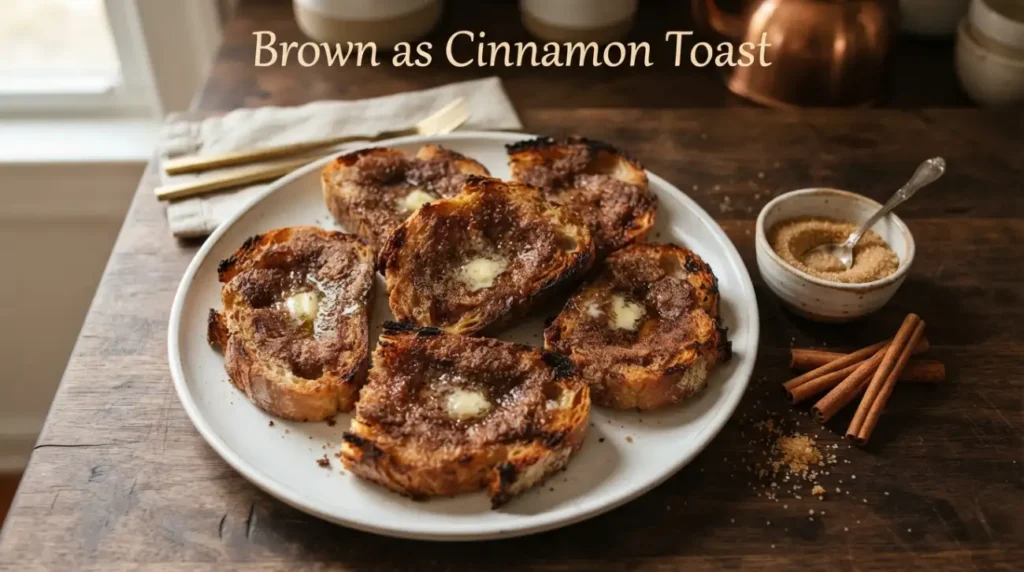
Simile: The crust was brown as cinnamon toast.
Meaning: It had a warm golden-brown color.
Explanation: Cinnamon toast combines the familiar colors of toast and cinnamon.
Examples:
- The bread was brown as cinnamon toast.
- Her sweater was brown like cinnamon toast.
22. Brown Like a Pine Cone
Simile: The pine cone was brown like dry wood.
Meaning: Something has a natural, dry brown color.
Explanation: Pine cones are usually earthy brown.
Examples:
- The decoration was brown like a pine cone.
- The small object was brown as a dry pine cone.
23. Brown as a Wooden Door
Simile: The door was brown as old wood.
Meaning: It had a deep, aged brown color.
Explanation: Old wooden doors often have warm and dark brown tones.
Examples:
- The door was brown as old wood.
- The cabin had walls brown like a wooden door.
24. Brown Like Roasted Coffee
Simile: The liquid was brown like roasted coffee.
Meaning: It was a deep and rich brown.
Explanation: Roasted coffee creates a strong image of dark brown.
Examples:
- The drink was brown like roasted coffee.
- His eyes were brown as a cup of coffee.
25. Brown as a Mushroom
Simile: The mushroom was brown as dried earth.
Meaning: It had a soft natural brown shade.
Explanation: Many mushrooms have earthy brown colors.
Examples:
- The little mushroom was brown like the soil.
- The rock was brown as a forest mushroom.
26. Brown Like a Chocolate Cookie
Simile: The cookie was brown like chocolate.
Meaning: It was a warm, dark brown.
Explanation: Chocolate cookies provide a tasty and familiar comparison.
Examples:
- The cake was brown like a chocolate cookie.
- The puppy’s fur was brown as a cookie.
27. Brown as a Ripe Coconut
Simile: The coconut shell was brown as dry wood.
Meaning: It had a hard, earthy brown color.
Explanation: A mature coconut has a familiar brown outer shell.
Examples:
- The shell was brown like a coconut.
- The object was rough and brown like a coconut husk.
28. Brown Like a Horse’s Coat
Simile: The dog was brown like a horse’s coat.
Meaning: The dog’s fur had a warm natural brown color.
Explanation: Horses can have beautiful shades of brown, making them useful comparisons.
Examples:
- The puppy was brown like a horse.
- His jacket was as brown as a horse’s coat.
29. Brown as Roasted Nuts
Simile: The cookies were brown as roasted nuts.
Meaning: They had a warm, toasted brown color.
Explanation: Roasted nuts often develop a rich brown surface.
Examples:
- The bread was brown as roasted nuts.
- The snack looked brown like toasted almonds.
30. Brown Like a Desert Path
Simile: The road was brown like a desert path.
Meaning: It looked dry, dusty, and earthy.
Explanation: Desert paths often have sandy brown colors.
Examples:
- The trail was brown like a desert path.
- The dusty road looked brown as dry sand.
31. Brown as a Wooden Fence
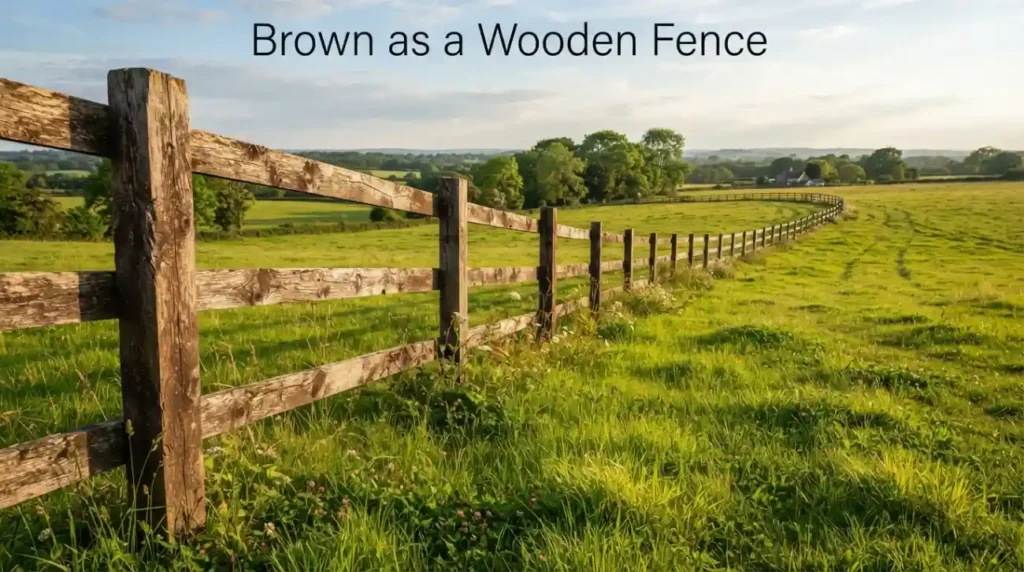
Simile: The fence was brown as old wood.
Meaning: It had a natural and slightly aged brown shade.
Explanation: Wooden fences are often painted or naturally colored brown.
Examples:
- The fence was brown like tree bark.
- The garden gate was brown as old wood.
32. Brown Like a Tiger’s Fur
Simile: The fabric was brown like a tiger’s fur.
Meaning: It had a warm, earthy brown color.
Explanation: Some tiger coats contain beautiful golden-brown shades.
Examples:
- The blanket was brown like tiger fur.
- His coat was as brown as a tiger’s back.
33. Brown as a Leather Shoe
Simile: His shoes were brown as leather.
Meaning: They had a classic warm brown shade.
Explanation: Brown leather shoes are common and easy for readers to picture.
Examples:
- His shoes were brown as leather.
- The boots looked brown like an old leather bag.
34. Brown Like a Walnut Shell
Simile: The bowl was brown like a walnut shell.
Meaning: It had a hard, deep brown color.
Explanation: Walnut shells are a strong natural example of dark brown.
Examples:
- The bowl was brown like a walnut shell.
- The small box was brown as a walnut.
35. Brown as Hot Chocolate
Simile: The drink was brown as hot chocolate.
Meaning: It had a warm, dark brown color.
Explanation: Hot chocolate gives a cozy and familiar image.
Examples:
- The drink was brown as hot chocolate.
- Her eyes were brown like warm cocoa.
36. Brown Like Cocoa Powder
Simile: The powder was brown like cocoa.
Meaning: It had a dark, rich brown color.
Explanation: Cocoa powder is a strong visual example of deep brown.
Examples:
- The soil was brown like cocoa powder.
- His jacket was brown as cocoa.
37. Brown as a Brick Wall
Simile: The building was brown as an old brick wall.
Meaning: It had a warm reddish-brown color.
Explanation: Old bricks often have brown, red, and earthy tones.
Examples:
- The wall was brown as an old brick.
- The house looked brown like a brick building.
38. Brown Like a Forest Floor
Simile: The ground was brown like a forest floor.
Meaning: It looked earthy, natural, and dark.
Explanation: A forest floor contains soil, leaves, and wood, creating many shades of brown.
Examples:
- The path was brown like a forest floor.
- The ground looked brown as fallen leaves.
39. Brown as a Nutmeg
Simile: The spice was brown as nutmeg.
Meaning: It had a warm, earthy brown color.
Explanation: Nutmeg has a familiar warm brown shade.
Examples:
- The powder was brown as nutmeg.
- The fabric was brown like ground spice.
40. Brown Like a Paper Bag
Simile: The package was brown like a paper bag.
Meaning: It had a simple, light brown color.
Explanation: Paper bags are commonly light or medium brown.
Examples:
- The box was brown like a paper bag.
- The envelope was brown as plain paper.
41. Brown as a Coffee Mug
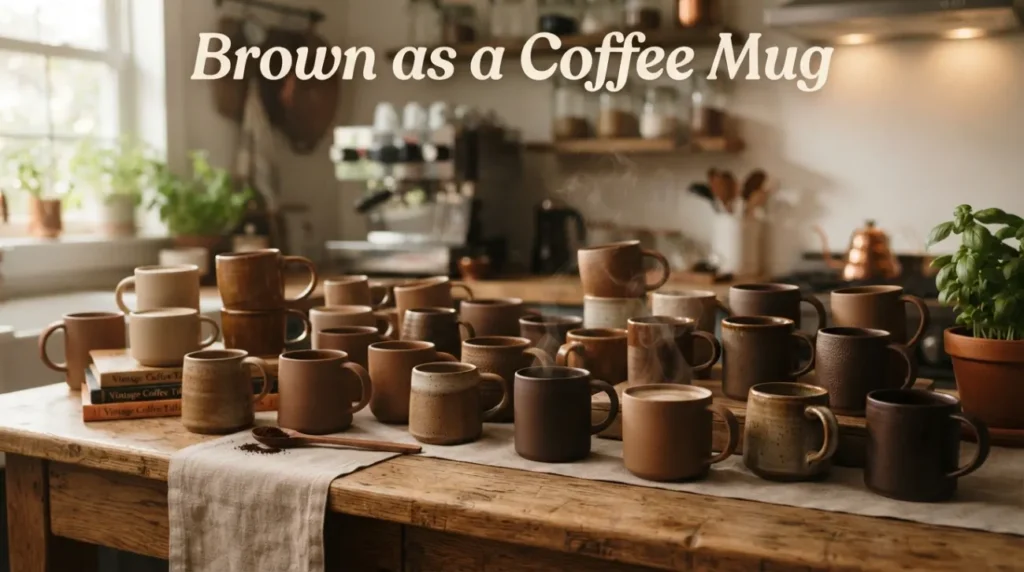
Simile: The mug was brown as coffee.
Meaning: The mug had a deep brown color.
Explanation: Coffee is an easy everyday comparison for brown.
Examples:
- The cup was brown as coffee.
- Her mug was brown like freshly brewed coffee.
42. Brown Like a Pine Tree
Simile: The trunk was brown like a pine tree.
Meaning: It had a natural tree-bark brown shade.
Explanation: Pine trees have brown trunks that make a clear comparison.
Examples:
- The post was brown like a pine tree.
- The old trunk was brown as tree bark.
43. Brown as Dried Leaves
Simile: The grass was brown as dried leaves.
Meaning: It looked dry, faded, and earthy.
Explanation: Dried leaves often turn brown and create a natural autumn image.
Examples:
- The grass was brown as dried leaves.
- The garden looked brown like fallen leaves.
44. Brown Like a Chocolate Cake
Simile: The cake was brown like chocolate cake.
Meaning: It had a rich, dark brown color.
Explanation: Chocolate cake is an easy way to describe a deep brown shade.
Examples:
- The dessert was brown like chocolate cake.
- Her hair was brown as a chocolate cake.
45. Brown as a Clay Brick
Simile: The wall was brown as a clay brick.
Meaning: It had a warm earthy brown color.
Explanation: Clay bricks are often reddish brown or earthy brown.
Examples:
- The wall was brown like a clay brick.
- The house looked brown as baked clay.
46. Brown Like a Dusty Road
Simile: The road was brown like a dusty road.
Meaning: It looked dry, dusty, and earthy.
Explanation: This comparison creates a strong picture of a dry brown surface.
Examples:
- The path was brown like a dusty road.
- The field looked brown as a dirt road.
47. Brown as a Chocolate Bar
Simile: The box was brown as a chocolate bar.
Meaning: It had a dark, rich brown shade.
Explanation: A chocolate bar is a simple and familiar comparison.
Examples:
- The package was brown as chocolate.
- His jacket was brown like a chocolate bar.
48. Brown Like an Acorn
Simile: The small object was brown like an acorn.
Meaning: It had a natural earthy brown color.
Explanation: Acorns are small, brown objects commonly found in nature.
Examples:
- The button was brown like an acorn.
- The decoration was brown as a little acorn.
49. Brown as a Rustic Cabin
Simile: The house was brown as a rustic cabin.
Meaning: It had a warm, natural, wooden appearance.
Explanation: Rustic cabins often use brown wood and earthy colors.
Examples:
- The cottage was brown like a rustic cabin.
- The room looked warm and brown like an old cabin.
50. Brown Like Warm Earth
Simile: The blanket was brown like warm earth.
Meaning: It had a soft, natural, earthy brown shade.
Explanation: This simile gives a calm and natural feeling to the color brown.
Examples:
- Her sweater was brown like warm earth.
- The blanket looked brown as freshly turned soil.
Practical Exercise: Test Your Simile Skills
Try answering these questions before looking at the answers.
1. Complete the simile:
Her eyes were brown like ________.
Answer: chocolate
Explanation: Chocolate is a familiar example of a rich brown color.
2. Which comparison best describes a natural brown color?
Brown like snow
Brown like glass
Answer: B. Brown like earth
Explanation: Earth is naturally brown and creates an easy visual image.
3. Complete the sentence:
The coffee was as brown as ________.
Answer: roasted nuts
Explanation: Roasted nuts often have a warm brown color.
4. Which simile could describe brown hair?
Brown like cinnamon
Brown like a cloud
Answer: A. Brown like cinnamon
Explanation: Cinnamon has a warm brown shade that can describe hair.
5. Complete the simile:
The old wooden door was brown like ________.
Answer: tree bark
Explanation: Tree bark is a natural brown surface, making it a strong comparison.
6. Which simile creates a dark brown image?
Brown like milk
Brown like snow
Answer: B. Brown like cocoa
Explanation: Cocoa is dark and rich in color.
7. Complete the sentence:
The muddy boots were brown as ________.
Answer: mud
Explanation: Mud gives a simple and direct comparison for brown.
8. Which comparison creates a warm brown image?
Brown as caramel
Brown as a cloud
Answer: A. Brown as caramel
Explanation: Caramel has a warm golden-brown color.
9. Create your own simile:
The old table was brown like __________.
Answer: a walnut
Explanation: A walnut can represent a rich, natural brown shade.
10. Complete the simile:
The autumn leaves were brown as ________.
Answer: dried leaves
Explanation: Dried leaves commonly turn brown, making the comparison easy to understand.
Conclusion:
Similes make ordinary descriptions more colorful and interesting. Instead of simply saying something is brown, you can compare it with chocolate, coffee, earth, cinnamon, tree bark, caramel, or many other familiar things.
The meaning of similes becomes clearer when you connect a color or object to something readers already know. These creative writing similes can help your stories, poems, essays, and descriptions feel more vivid.
When you write, stop and ask yourself: “What does this brown thing remind me of?” Maybe it looks like warm earth, a chocolate bar, an old wooden door, or a roasted coffee bean.
Keep practicing, and soon you will create your own unique simile sentences naturally. The more you experiment, the more colorful your writing can become.

Ethan Whitmore is the founder and lead writer of Similezvio.com, passionate about exploring meanings, language, literature, and insightful ideas. Through well-researched and engaging content, he helps readers discover the deeper significance behind words, expressions, and everyday concepts.