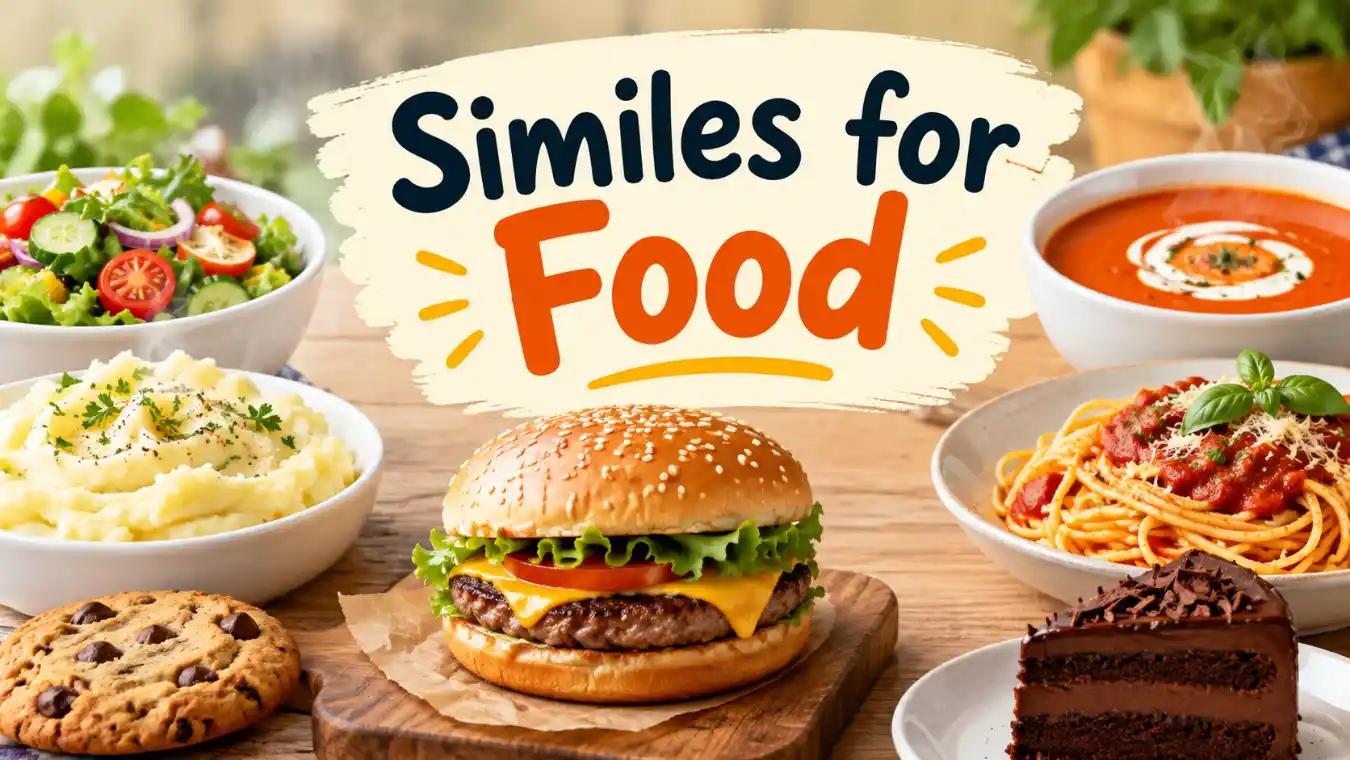
Have you ever eaten something so delicious that simply saying “It tastes good” did not feel enough? That is where similes for food can make your writing more colorful.
A simile compares one thing with another by using words such as “like” or “as.”
For example, you might say, “The cake was as soft as a cloud.” The cake is not really a cloud, but this comparison helps the reader imagine how soft it was.
In simple terms, similes help readers see, taste, smell, or even feel what you are describing. They are useful in stories, poems, food reviews, social media captions, school assignments, and everyday writing.
If you are learning creative writing, food is a fun place to start. Food has many textures, flavors, colors, smells, and temperatures.
Let’s explore 50 creative food similes and see how each one works in a sentence.
What Is a Simile?
A simile is a figure of speech that compares two different things using “like” or “as.” The comparison helps make an idea easier to picture.
For example:
“The soup was as hot as fire.”
The soup is not actually fire. The writer compares its heat to fire so the reader understands that it was extremely hot.
When you use creative writing similes, ordinary descriptions become more interesting. Instead of saying “The bread was soft,” you could say, “The bread was as soft as a pillow.”
Now the reader gets a stronger picture.
Similes can describe almost anything about food, including taste, texture, temperature, appearance, smell, and even the way someone eats it. You might say a lemon is as sour as vinegar, a cookie is crunchy like dry leaves, or chocolate is smooth as silk.
These examples of similes show how a simple comparison can make food descriptions much more vivid.
50 Similes for Food
🍰 1. As sweet as honey
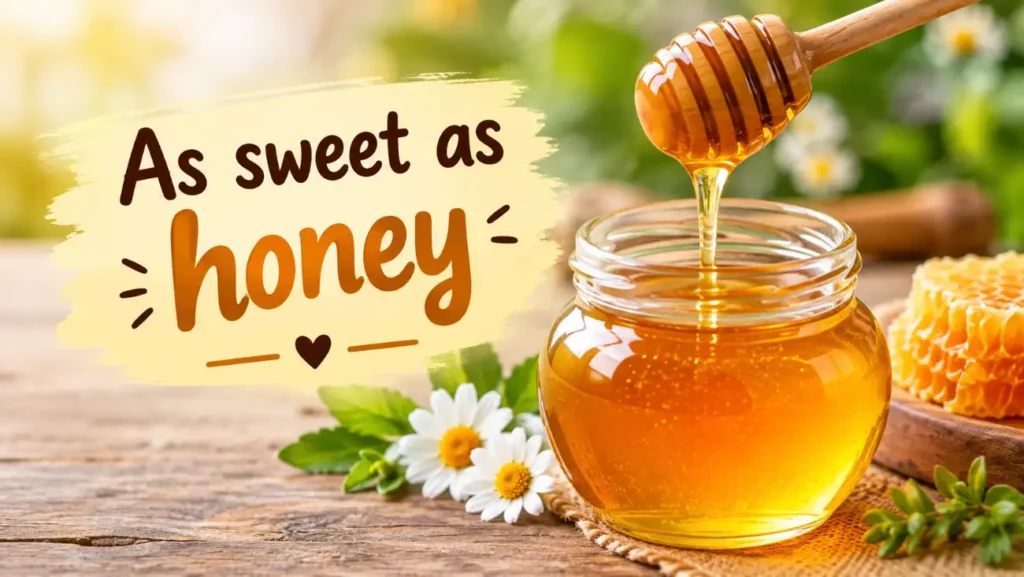
Meaning: Extremely sweet.
Explanation: This simile compares the sweetness of food with honey, which is naturally sweet.
Example: The fresh strawberries were as sweet as honey.
Example: Her homemade cake was as sweet as honey.
🍞 2. As soft as a cloud
Meaning: Very soft and light.
Explanation: Clouds are often imagined as soft and fluffy, making this a useful comparison for soft food.
Example: The fresh bread was as soft as a cloud.
Example: The sponge cake felt as soft as a cloud.
🍋 3. As sour as vinegar
Meaning: Extremely sour.
Explanation: Vinegar has a strong sour taste, so this simile emphasizes sharpness.
Example: The lemon was as sour as vinegar.
Example: The green candy tasted as sour as vinegar.
🍪 4. As crunchy as dry leaves
Meaning: Very crisp and crunchy.
Explanation: Dry leaves make a familiar crunchy sound when stepped on.
Example: The potato chips were as crunchy as dry leaves.
Example: The fried crackers were as crunchy as dry leaves.
🍫 5. Smooth like silk
Meaning: Very smooth and creamy.
Explanation: Silk is known for its soft, smooth texture.
Example: The melted chocolate was smooth like silk.
Example: The pudding felt smooth like silk on my tongue.
🌶️ 6. As hot as fire
Meaning: Extremely hot or spicy.
Explanation: Fire represents intense heat, making it a strong comparison for spicy or hot food.
Example: The curry was as hot as fire.
Example: I needed water because the sauce was as hot as fire.
🧊 7. As cold as ice
Meaning: Extremely cold.
Explanation: Ice is a familiar symbol of intense coldness.
Example: The lemonade was as cold as ice.
Example: The fruit salad was as cold as ice.
🍬 8. Sweet like candy
Meaning: Very sweet and pleasant.
Explanation: Candy is strongly associated with sweetness.
Example: The mango tasted sweet like candy.
Example: The little dessert was sweet like candy.
🥨 9. Crunchy like a cracker
Meaning: Firm and crisp when bitten.
Explanation: Crackers make a noticeable crunch, making them useful for describing crisp foods.
Example: The fried chicken was crunchy like a cracker.
Example: The snack was crunchy like a cracker.
🥣 10. Thick as mud
Meaning: Very thick and heavy.
Explanation: Mud can be dense and difficult to move through.
Example: The chocolate pudding was thick as mud.
Example: The sauce became thick as mud after cooking.
🍯 11. Sticky like glue
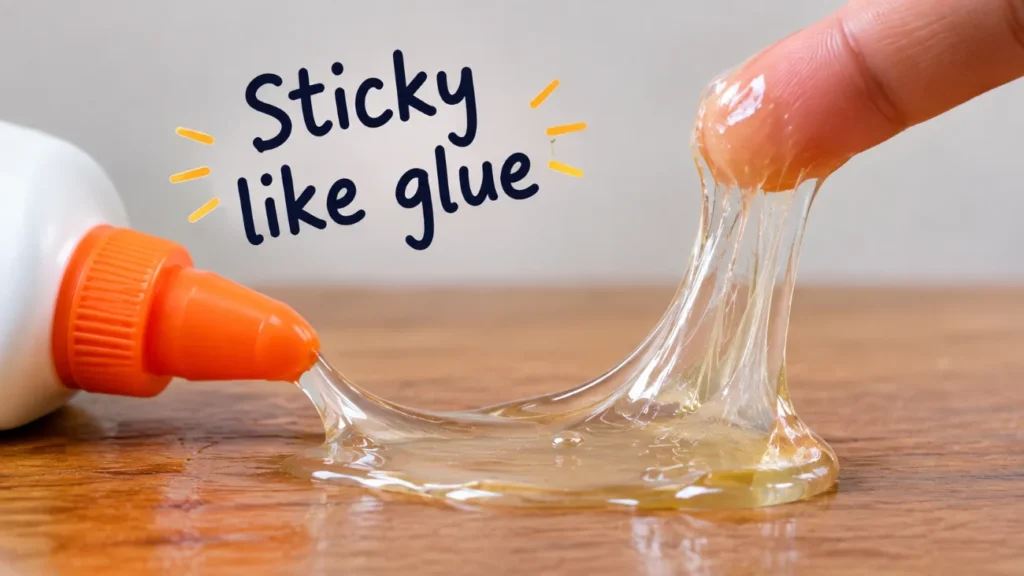
Meaning: Very sticky.
Explanation: Glue sticks strongly to surfaces, so this comparison clearly describes sticky food.
Example: The caramel was sticky like glue.
Example: The melted marshmallow was sticky like glue.
🍦 12. Cold like winter
Meaning: Very cold.
Explanation: Winter is commonly associated with freezing temperatures.
Example: The ice cream was cold like winter.
Example: The frozen yogurt felt cold like winter.
🥭 13. Juicy like a ripe peach
Meaning: Full of juice and moisture.
Explanation: A ripe peach is a familiar example of juicy fruit.
Example: The mango was juicy like a ripe peach.
Example: The watermelon was juicy like a ripe peach.
🍟 14. Golden like the sun
Meaning: Bright golden in color.
Explanation: The sun gives us a strong image of warm golden color.
Example: The fries were golden like the sun.
Example: The roasted potatoes looked golden like the sun.
🥛 15. White as snow
Meaning: Very white.
Explanation: Snow is commonly used to represent a bright, clean white color.
Example: The frosting was white as snow.
Example: The coconut dessert was white as snow.
🍓 16. Red like a rose
Meaning: Bright red.
Explanation: Roses are often used to describe a rich red color.
Example: The strawberries were red like roses.
Example: The cherry topping was red like a rose.
🍵 17. Warm like a cozy blanket
Meaning: Comfortingly warm.
Explanation: A warm blanket gives a feeling of comfort and coziness.
Example: The soup was warm like a cozy blanket.
Example: The fresh tea felt warm like a cozy blanket.
🍿 18. Light as a feather
Meaning: Very light and airy.
Explanation: Feathers are extremely light, making them a good comparison for fluffy foods.
Example: The soufflé was light as a feather.
Example: The whipped cream was light as a feather.
🧈 19. Soft like butter
Meaning: Very soft and easy to cut or spread.
Explanation: Butter becomes soft at room temperature.
Example: The cooked potato was soft like butter.
Example: The bread was soft like butter.
🥜 20. Hard as a rock
Meaning: Extremely hard.
Explanation: Rocks are hard and difficult to break.
Example: The stale bread was hard as a rock.
Example: The overcooked meat was hard as a rock.
🍯 21. Smooth as honey
Meaning: Very smooth and flowing.
Explanation: Honey has a thick but smooth texture as it flows.
Example: The sauce was smooth as honey.
Example: The caramel became smooth as honey.
🍉 22. Fresh like morning rain

Meaning: Very fresh and refreshing.
Explanation: Morning rain creates an image of freshness and cleanliness.
Example: The fruit salad tasted fresh like morning rain.
Example: The cucumber was fresh like morning rain.
🍕 23. Cheesy like a pizza
Meaning: Full of melted cheese.
Explanation: Pizza is strongly associated with rich, melted cheese.
Example: The pasta was cheesy like a pizza.
Example: The baked potatoes were cheesy like a pizza.
🧁 24. Fluffy like a pillow
Meaning: Very soft and airy.
Explanation: A pillow gives readers an easy image of softness.
Example: The cupcakes were fluffy like pillows.
Example: The pancakes were fluffy like a pillow.
🍚 25. White like a pearl
Meaning: Bright and clean-looking white.
Explanation: Pearls are often admired for their smooth white appearance.
Example: The rice was white like a pearl.
Example: The coconut topping looked white like a pearl.
🍍 26. Tart like a green apple
Meaning: Slightly sour and sharp.
Explanation: Green apples are often associated with a crisp, tart flavor.
Example: The sauce was tart like a green apple.
Example: The candy tasted tart like a green apple.
🥧 27. Golden like freshly baked bread
Meaning: Warm and golden-brown.
Explanation: Fresh bread often develops a beautiful golden crust.
Example: The pie crust was golden like freshly baked bread.
Example: The biscuits looked golden like freshly baked bread.
🍝 28. Slippery like wet noodles
Meaning: Very slippery and difficult to hold.
Explanation: Wet noodles are a familiar example of slippery food.
Example: The noodles were slippery like wet noodles.
Example: The pasta felt slippery like wet noodles.
🍮 29. Creamy like velvet
Meaning: Very smooth and rich.
Explanation: Velvet has a soft, luxurious texture, making it a creative comparison for creamy foods.
Example: The soup was creamy like velvet.
Example: The custard felt creamy like velvet.
🍇 30. Round like a marble
Meaning: Small and perfectly rounded.
Explanation: Marbles provide a clear image of roundness.
Example: The grapes were round like marbles.
Example: The little candies were round like marbles.
🥩 31. Tender like a flower petal
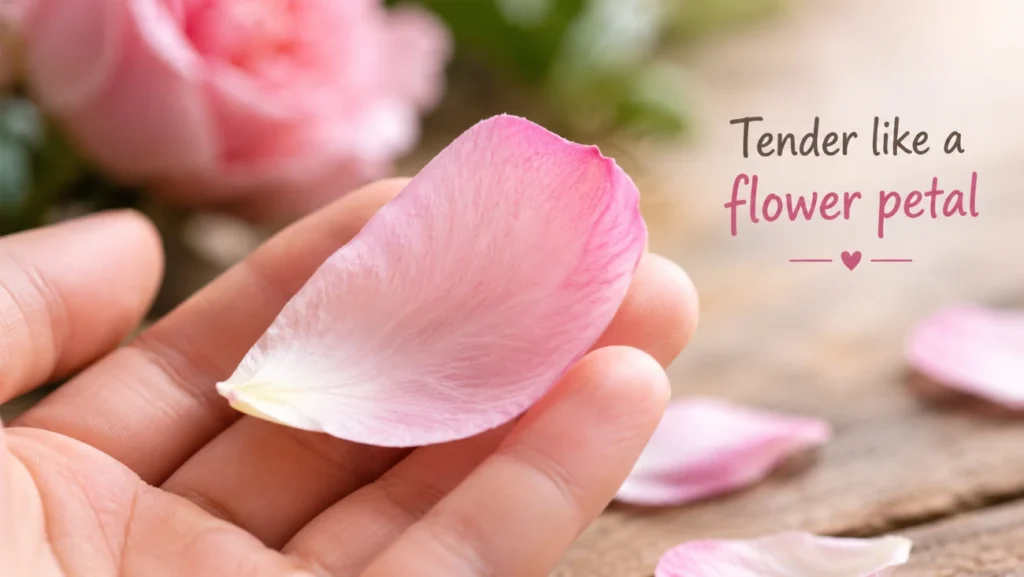
Meaning: Very soft and delicate.
Explanation: Flower petals are delicate and gentle, making them useful for describing tender food.
Example: The meat was tender like a flower petal.
Example: The cooked vegetables were tender like flower petals.
🍋 32. Sharp like a lemon
Meaning: Strong, sour, or intense in flavor.
Explanation: Lemon has a powerful sour flavor that can make food taste sharp.
Example: The dressing was sharp like a lemon.
Example: The sauce tasted sharp like a lemon.
🍯 33. Rich like melted chocolate
Meaning: Deep, strong, and satisfying.
Explanation: Melted chocolate gives an image of rich flavor and texture.
Example: The dessert tasted rich like melted chocolate.
Example: The chocolate sauce was rich like melted chocolate.
🍎 34. Crisp like an autumn morning
Meaning: Fresh, cool, and crisp.
Explanation: A cool autumn morning creates a strong image of freshness.
Example: The apple was crisp like an autumn morning.
Example: The salad tasted crisp like an autumn morning.
🍞 35. Dry as a desert
Meaning: Extremely dry.
Explanation: A desert receives very little rain, so it represents extreme dryness.
Example: The old bread was dry as a desert.
Example: The cake became dry as a desert after sitting out.
🍨 36. Cool as a breeze
Meaning: Pleasantly cool.
Explanation: A gentle breeze can feel refreshing on a warm day.
Example: The ice cream was cool as a breeze.
Example: The mint drink was cool as a breeze.
🥗 37. Green like a garden
Meaning: Bright or fresh green.
Explanation: A garden filled with plants provides a natural image of green color.
Example: The salad looked green like a garden.
Example: The fresh herbs were green like a garden.
🍫 38. Dark as midnight
Meaning: Very dark in color.
Explanation: Midnight provides a familiar image of deep darkness.
Example: The chocolate was dark at midnight.
Example: The coffee looked dark at midnight.
🍰 39. Sweet like a summer day
Meaning: Pleasant, cheerful, and sweet.
Explanation: A summer day can create feelings of warmth and happiness.
Example: The peach dessert was sweet like a summer day.
Example: The lemonade was sweet like a summer day.
🥣 40. Thick like cream
Meaning: Dense and creamy.
Explanation: Cream has a thick, rich texture that works well as a food comparison.
Example: The soup was thick like cream.
Example: The sauce was thick like cream.
🥒 41. Cool as a cucumber
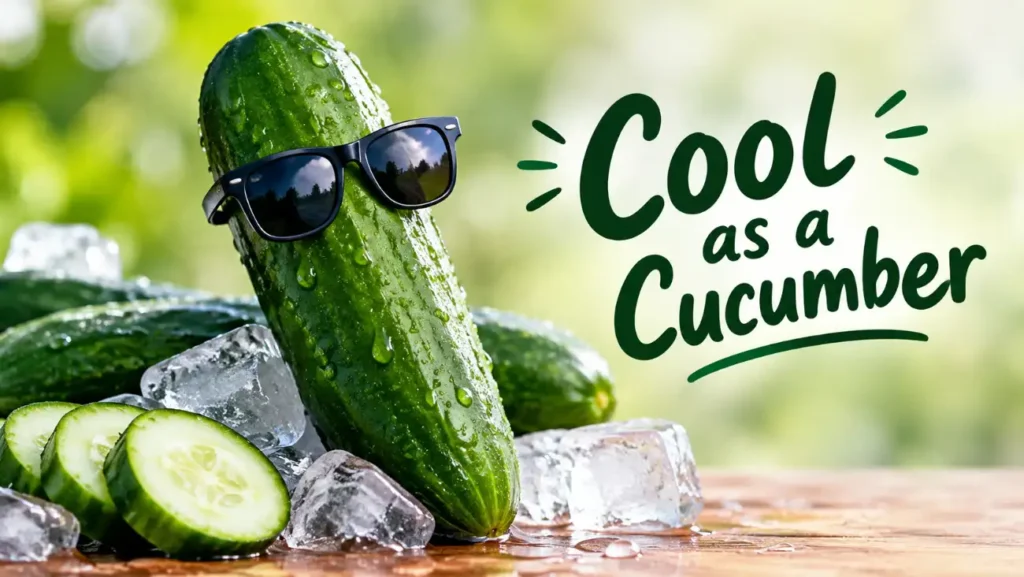
Meaning: Cool and refreshing.
Explanation: This is a well-known expression that connects cucumbers with a cool, refreshing feeling.
Example: The cucumber salad was cool as a cucumber.
Example: The chilled soup was cool as a cucumber.
🍳 42. Bright like a sunrise
Meaning: Bright and colorful.
Explanation: A sunrise can have strong orange, yellow, and pink colors.
Example: The fruit bowl was bright like a sunrise.
Example: The breakfast plate looked bright like a sunrise.
🥞 43. Soft like a sponge
Meaning: Very soft and springy.
Explanation: A sponge is soft and gives slightly when pressed.
Example: The pancakes were soft like a sponge.
Example: The cake felt soft like a sponge.
🍗 44. Crispy like autumn leaves
Meaning: Very crisp and crunchy.
Explanation: Dry autumn leaves make a familiar crisp sound when they are stepped on.
Example: The fried chicken was crispy like autumn leaves.
Example: The roasted potatoes were crispy like autumn leaves.
🍓 45. Bright red like a ruby
Meaning: Deep and vivid red.
Explanation: Rubies are famous for their rich red color.
Example: The strawberry jam was bright red like a ruby.
Example: The cherries looked red like rubies.
🍦 46. Melting like snow in sunlight
Meaning: Disappearing or becoming liquid very quickly.
Explanation: Snow melts quickly when exposed to warm sunlight.
Example: The ice cream was melting like snow in sunlight.
Example: The frozen dessert started melting like snow in sunlight.
🍲 47. Fragrant like a flower garden
Meaning: Having a strong and pleasant smell.
Explanation: A flower garden is known for beautiful and noticeable scents.
Example: The soup smelled fragrant like a flower garden.
Example: The fresh herbs were fragrant like a flower garden.
🍪 48. Delicious like a homemade treat
Meaning: Extremely enjoyable to eat.
Explanation: Homemade treats often suggest warmth, care, and delicious flavor.
Example: The cookies were delicious like a homemade treat.
Example: The warm pie tasted delicious like a homemade treat.
🧀 49. Tangy like fresh yogurt
Meaning: Pleasantly sharp or sour.
Explanation: Yogurt often has a mild tangy flavor.
Example: The dressing was tangy like fresh yogurt.
Example: The sauce tasted tangy like fresh yogurt.
🍯 50. Rich as a chocolate cake
Meaning: Very rich, strong, and satisfying.
Explanation: Chocolate cake gives a familiar image of deep, rich flavor.
Example: The dessert was rich as a chocolate cake.
Example: The pudding tasted rich as a chocolate cake.
✍️ Practical Exercise: Test Your Simile Skills
Now it is your turn. These quick questions will help you practice the meaning of similes and learn how to use similes in writing.
1. Complete the simile: The cake was as soft as _____.
Answer: The cake was as soft as a cloud.
2. Which simile describes something very sour?
Answer: As sour as vinegar.
3. Complete the sentence: The chips were crunchy like _____.
Answer: The chips were crunchy like dry leaves.
4. What does “as hot as fire” mean when describing food?
Answer: It means the food is extremely hot or spicy.
5. Which simile could describe a very cold drink?
Answer: As cold as ice.
6. Complete the simile: The caramel was sticky like _____.
Answer: The caramel was sticky like glue.
7. What does “light as a feather” suggest about food?
Answer: It suggests that the food is very light and airy.
8. Create a simile for a very sweet dessert.
Answer: The dessert was as sweet as honey.
9. Which simile can describe food that is extremely hard?
Answer: As hard as a rock.
10. Write a simile for creamy food.
Answer: The soup was creamy like velvet.
How to Create Your Own Food Similes
Creating your own similes is easier than it may seem. Start by thinking about the quality you want to describe.
Is the food sweet, sour, hot, cold, soft, crunchy, creamy, colorful, dry, or juicy?
Next, think of something outside the food world that has the same quality.
For example, if you want to describe something very soft, think about a cloud, pillow, feather, or sponge. Then connect the two ideas with like or as.
You could write:
The bread was as soft as a pillow.
You can also make your similes more creative by using familiar sights, sounds, places, nature, or objects.
Instead of saying:
The apple was crunchy.
Try:
The apple was crisp like autumn leaves.
The second sentence gives the reader a stronger picture. This is the main power of similes.
When learning how to use similes in writing, remember that the comparison should make sense. A good simile should help the reader imagine the food instead of making the description confusing.
Why Use Similes for Food?
Food descriptions can sometimes become repetitive. Words such as good, tasty, delicious, sweet, and nice are useful, but they do not always give readers a clear picture.
Similes allow you to add detail and personality.
For example:
The soup was hot.
This tells us one fact.
Now compare it with:
The soup was as hot as fire.
The second sentence creates a stronger image.
Similes are especially helpful for food bloggers, students, creative writers, poets, social media creators, and anyone who wants to make descriptions more interesting.
They can also make your writing more memorable. A reader may forget the sentence “The cookies were crunchy,” but “The cookies were crispy like autumn leaves” creates a more vivid mental image.
Examples of Similes in Everyday Writing
You do not need to use similes only in stories or poems. They can appear in everyday writing too.
A food blogger might write:
“The fried chicken was crispy like autumn leaves.”
An Instagram caption could say:
“Sweet like honey and gone in seconds!”
A student writing a story might say:
“The warm soup felt like a cozy blanket on a cold night.”
A restaurant review could say:
“The chocolate dessert was smooth like silk.”
These simile sentences make ordinary food descriptions more colorful and engaging.
The key is to choose a comparison that your reader can understand quickly.
Final Thoughts
Similes are a simple but powerful way to make food descriptions more vivid. Instead of simply telling readers that something is sweet, crunchy, soft, hot, or creamy, you can compare it with something familiar.
The 50 similes for food in this guide can help you understand the meaning of similes and see how they work in real sentences. You can use them in stories, poems, schoolwork, reviews, captions, blogs, and everyday writing.
Most importantly, do not be afraid to create your own comparisons. Look at the food, think about its texture, taste, color, smell, or temperature, and ask yourself what it reminds you of.
With a little practice, your food descriptions can become more creative, memorable, and fun.