Have you ever heard thunder during a storm and thought it sounded like something much bigger than a simple noise? Thunder can boom, crack, rumble, roar, or shake the air.
That is why it is a great subject for creative writing. Similes for thunder help you describe this powerful sound in a clear and exciting way.
A simile compares one thing to another using words such as “like” or “as.” For example, you might say, “The thunder was like a giant drum.”
You are not saying thunder is really a drum. You are helping the reader imagine its deep and powerful sound.
In simple terms, similes make writing easier to picture. They can make a storm feel louder, darker, scarier, or even peaceful.
Writers use them in stories, poems, essays, and creative descriptions.Let’s explore 50 creative writing similes for thunder.
Each example includes its meaning, a short explanation, and two simile sentences so you can learn how to use these comparisons naturally in your own writing.
50 Similes for Thunder
1. Thunder like a giant drum
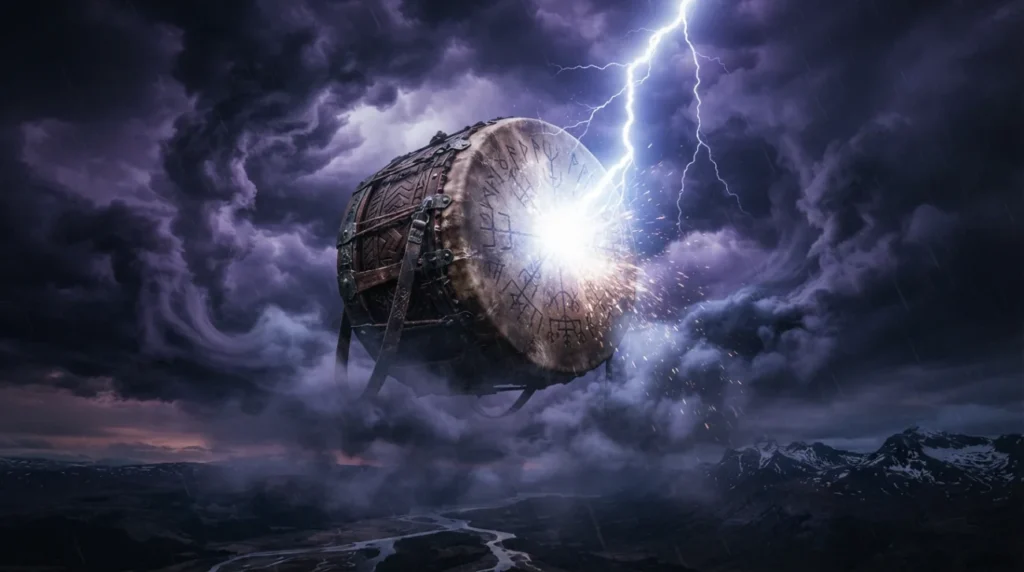
Meaning: Thunder sounds deep, loud, and powerful.
Explanation: This comparison makes thunder seem like a huge drum being beaten across the sky. It works well when describing a strong storm.
Example sentences:
- The thunder sounded like a giant drum above our house.
- Outside, thunder rolled like a giant drum in the distance.
2. Thunder like a roaring lion
Meaning: Thunder is loud, fierce, and frightening.
Explanation: A roaring lion is powerful and impossible to ignore. Comparing thunder to one gives the storm a wild and threatening feeling.
Example sentences:
- The thunder crashed like a roaring lion in the dark sky.
- Thunder growled like a roaring lion beyond the hills.
3. Thunder like an explosion
Meaning: Thunder arrives with a sudden and powerful sound.
Explanation: This simile emphasizes the shocking volume of thunder. It is useful for dramatic storm scenes.
Example sentences:
- The thunder burst overhead like an explosion.
- A loud clap of thunder sounded like an explosion outside.
4. Thunder like a crashing wave
Meaning: Thunder is loud, rolling, and continuous.
Explanation: A crashing wave has a strong movement and sound. This comparison makes thunder feel as if it is rushing across the sky.
Example sentences:
- Thunder rolled like a crashing wave across the valley.
- The storm sounded like a crashing wave above the town.
5. Thunder as loud as a cannon
Meaning: Thunder is extremely loud.
Explanation: A cannon produces a powerful boom, so this simile shows just how startling the thunder can be.
Example sentences:
- The thunder was as loud as a cannon.
- A sudden boom was as loud as a cannon fired nearby.
6. Thunder like a giant’s footsteps
Meaning: Thunder sounds deep and heavy.
Explanation: This simile creates a fantasy-like image. It makes the reader imagine a giant walking through the clouds.
Example sentences:
- The thunder sounded like a giant’s footsteps above us.
- Each rumble was like a giant’s footsteps shaking the sky.
7. Thunder like a drumroll
Meaning: Thunder makes a steady rolling sound.
Explanation: A drumroll often builds excitement. This simile works well when thunder grows louder before heavy rain.
Example sentences:
- Thunder rolled like a drumroll before the rain began.
- The distant thunder sounded like a drumroll in the clouds.
8. Thunder like a breaking tree
Meaning: Thunder makes a sudden cracking sound.
Explanation: A large tree snapping can create a sharp, startling noise. This simile is useful for sudden thunderclaps.
Example sentences:
- The thunder cracked like a breaking tree.
- A flash of lightning was followed by thunder like a breaking tree.
9. Thunder like a train
Meaning: Thunder is loud, deep, and moving.
Explanation: A passing train creates a long rumbling sound. This makes the storm feel as if it is traveling across the sky.
Example sentences:
- Thunder rumbled like a train passing in the distance.
- The storm moved overhead like a train of heavy sound.
10. Thunder as deep as a giant bell
Meaning: Thunder has a deep and powerful tone.
Explanation: A large bell creates a rich sound that can travel far. This simile focuses on the depth of thunder.
Example sentences:
- The thunder was as deep as a giant bell.
- A low rumble echoed as deep as a giant bell.
11. Thunder like a battle cry

Meaning: Thunder sounds fierce and powerful.
Explanation: A battle cry is loud and bold. This comparison gives the storm an energetic and dramatic mood.
Example sentences:
- The thunder rose like a battle cry across the sky.
- Each thunderclap sounded like a battle cry.
12. Thunder like a giant knocking
Meaning: Thunder sounds as if something huge is striking a door.
Explanation: This simile gives thunder a mysterious feeling, especially during a dark night.
Example sentences:
- Thunder sounded like a giant knocking at the clouds.
- The storm boomed like a giant knocking on our roof.
13. Thunder like a drum in the distance
Meaning: Thunder can sound far away and rhythmic.
Explanation: This creates the image of a distant drum slowly becoming louder.
Example sentences:
- The thunder sounded like a drum in the distance.
- We heard thunder like a drum in the distance before the rain arrived.
14. Thunder as strong as a hammer
Meaning: Thunder sounds forceful and sharp.
Explanation: A hammer hitting a hard surface makes a strong impact. This simile shows the force behind a thunderclap.
Example sentences:
- The thunder was as strong as a hammer striking metal.
- A sudden boom hit the sky as strong as a hammer.
15. Thunder like a giant growl
Meaning: Thunder sounds deep, rough, and threatening.
Explanation: A growl can make people feel uneasy. This comparison gives the storm a dark personality.
Example sentences:
- Thunder rolled like a giant growl through the clouds.
- The sky answered with a sound like a giant growl.
16. Thunder like a roaring waterfall
Meaning: Thunder is loud and continuous.
Explanation: A waterfall produces a constant, powerful sound. This simile works well for long stretches of rumbling thunder.
Example sentences:
- Thunder poured across the sky like a roaring waterfall.
- The storm sounded like a roaring waterfall overhead.
17. Thunder as loud as a marching band
Meaning: Thunder makes a loud and energetic noise.
Explanation: A marching band can fill an entire street with sound. This simile shows how thunder can dominate the surroundings.
Example sentences:
- The thunder was as loud as a marching band.
- The storm filled the night as loud as a marching band.
18. Thunder like a giant drumbeat
Meaning: Thunder produces a heavy booming sound.
Explanation: This comparison makes each thunderclap feel like one enormous beat.
Example sentences:
- Thunder struck like a giant drumbeat.
- Each rumble sounded like a giant drumbeat in the clouds.
19. Thunder like rocks falling
Meaning: Thunder sounds heavy and rough.
Explanation: Falling rocks can create loud crashing noises. This simile adds a rough and dramatic quality to the storm.
Example sentences:
- The thunder crashed like rocks falling down a mountain.
- The valley echoed with thunder like rocks falling.
20. Thunder like a giant’s roar
Meaning: Thunder is extremely loud and powerful.
Explanation: This simile gives thunder a mythical quality. It makes the sky seem alive and enormous.
Example sentences:
- Thunder shook the windows like a giant’s roar.
- The storm began with a sound like a giant’s roar.
21. Thunder like a door slamming
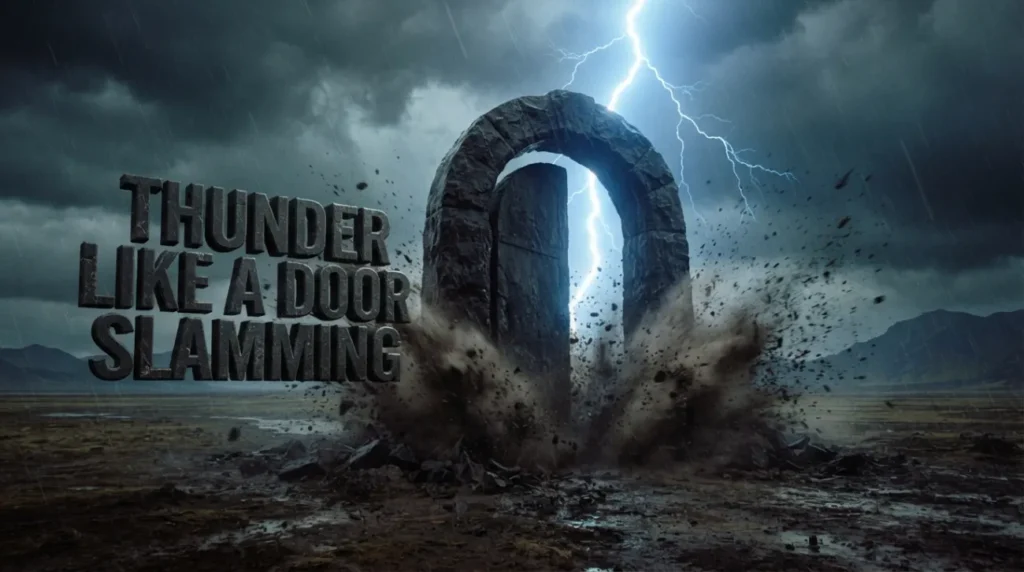
Meaning: Thunder arrives suddenly and loudly.
Explanation: A door slamming can make you jump. This simile is perfect for a sudden clap of thunder.
Example sentences:
- The thunder cracked like a door slamming.
- A sudden boom sounded like a door slamming in the night.
22. Thunder as fierce as a wild beast
Meaning: Thunder sounds frightening and powerful.
Explanation: A wild beast can be unpredictable and dangerous. This comparison gives the storm a fierce mood.
Example sentences:
- The thunder was as fierce as a wild beast.
- The storm roared as fierce as a wild beast.
23. Thunder like a giant machine
Meaning: Thunder sounds mechanical, deep, and powerful.
Explanation: This simile gives the storm an unusual and modern image.
Example sentences:
- Thunder rumbled like a giant machine in the sky.
- The clouds sounded like a giant machine turning above us.
24. Thunder like a heavy truck
Meaning: Thunder creates a deep rumbling noise.
Explanation: A heavy truck moving nearby can make the ground and windows vibrate. This comparison captures that feeling.
Example sentences:
- Thunder rolled like a heavy truck outside.
- The distant storm sounded like a heavy truck approaching.
25. Thunder like an angry giant
Meaning: Thunder sounds powerful, loud, and upset.
Explanation: This simile gives the storm human-like emotion and makes the scene more dramatic.
Example sentences:
- The thunder roared like an angry giant.
- The sky seemed to shout like an angry giant.
26. Thunder as sharp as a crack
Meaning: Thunder can make a sudden, sharp sound.
Explanation: This comparison focuses on the quick cracking noise of a nearby thunderclap.
Example sentences:
- The thunder was as sharp as a crack in the night.
- A thunderclap sounded as sharp as a crack of wood.
27. Thunder like a cannonball
Meaning: Thunder sounds sudden and powerful.
Explanation: A cannonball suggests force and impact. This simile makes thunder feel intense.
Example sentences:
- Thunder hit like a cannonball across the sky.
- The loud boom came like a cannonball from nowhere.
28. Thunder like a giant drum in a cave
Meaning: Thunder sounds deep and echoing.
Explanation: A drum inside a cave would create a deep echo. This simile adds mystery and depth.
Example sentences:
- The thunder echoed like a giant drum in a cave.
- The valley filled with sound like a giant drum in a cave.
29. Thunder like a rolling boulder
Meaning: Thunder has a long, heavy rumble.
Explanation: A boulder rolling downhill creates a deep and moving sound, much like distant thunder.
Example sentences:
- Thunder rolled like a rolling boulder across the mountains.
- The low thunder sounded like a rolling boulder.
30. Thunder as powerful as a stormy sea
Meaning: Thunder has great strength and energy.
Explanation: A stormy sea is wild and forceful. This comparison makes the storm feel huge and unstoppable.
Example sentences:
- The thunder was as powerful as a stormy sea.
- The clouds roared as powerful as a stormy sea.
31. Thunder like a shaken house
Meaning: Thunder is strong enough to make things vibrate.
Explanation: This simile focuses on the physical feeling of thunder rather than only its sound.
Example sentences:
- The thunder sounded like a shaken house.
- The windows rattled with a boom like a shaken house.
32. Thunder like a deep growl
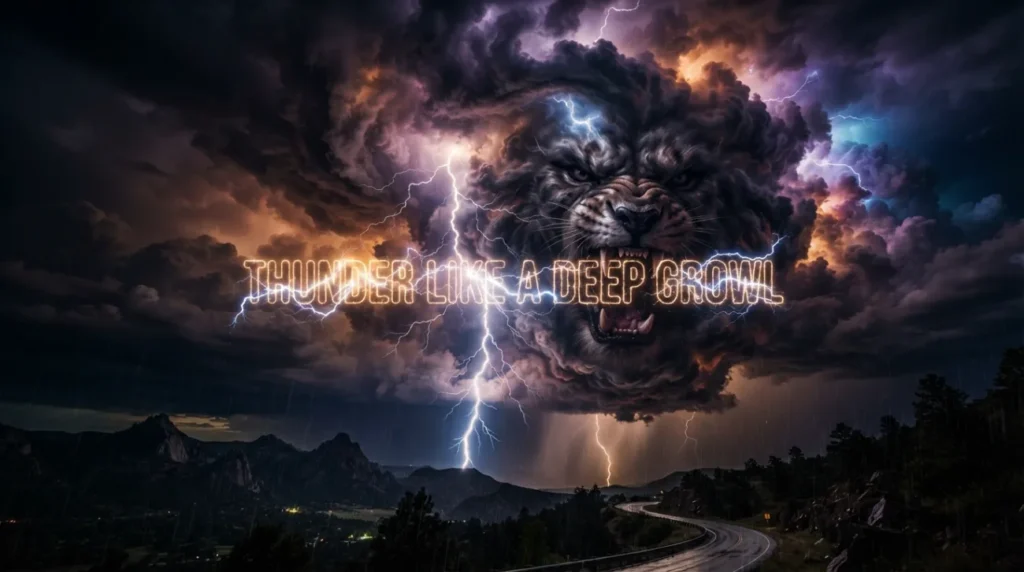
Meaning: Thunder makes a low and rough sound.
Explanation: A deep growl suggests something powerful nearby. It works well for distant or rolling thunder.
Example sentences:
- Thunder moved across the sky like a deep growl.
- We heard a sound like a deep growl behind the clouds.
33. Thunder like a giant drum in the heavens
Meaning: Thunder sounds enormous and echoing.
Explanation: This gives the sky a grand, almost magical image.
Example sentences:
- Thunder beat like a giant drum in the heavens.
- The storm sounded like a giant drum in the heavens.
34. Thunder as sudden as a shout
Meaning: Thunder can appear without warning.
Explanation: A sudden shout can surprise you. This simile emphasizes the unexpected nature of a thunderclap.
Example sentences:
- The thunder was as sudden as a shout.
- A boom came as sudden as a shout from the dark sky.
35. Thunder like a crashing drum
Meaning: Thunder is loud and explosive.
Explanation: Combining crashing and drumming words creates a vivid description of heavy thunder.
Example sentences:
- Thunder struck like a crashing drum.
- The storm filled the night like a crashing drum.
36. Thunder like an approaching army
Meaning: Thunder sounds as if something large is coming closer.
Explanation: This simile creates suspense. It is useful in stories where a storm slowly builds.
Example sentences:
- The thunder grew louder like an approaching army.
- Dark clouds arrived with thunder like an approaching army.
37. Thunder like a train on a bridge
Meaning: Thunder is loud, deep, and echoing.
Explanation: A train crossing a bridge can create a powerful rumble that travels far.
Example sentences:
- Thunder rolled like a train on a bridge.
- The valley echoed with thunder like a train on a bridge.
38. Thunder as deep as an underground cave
Meaning: Thunder has a very low and echoing sound.
Explanation: This comparison helps readers imagine a mysterious, deep rumble.
Example sentences:
- The thunder was as deep as an underground cave.
- A low rumble sounded as deep as an underground cave.
39. Thunder like a giant stomping
Meaning: Thunder sounds heavy and forceful.
Explanation: Giant footsteps create an image of great weight and power.
Example sentences:
- The thunder sounded like a giant stomping across the clouds.
- Each boom was like a giant stomping overhead.
40. Thunder like a huge drum overhead
Meaning: Thunder sounds close and powerful.
Explanation: This simile makes the reader feel as though a giant drum is directly above them.
Example sentences:
- The thunder beat like a huge drum overhead.
- Rain began after thunder like a huge drum overhead.
41. Thunder as loud as fireworks
Meaning: Thunder can make sharp, sudden, exciting sounds.
Explanation: Fireworks are known for loud bursts, making this a simple comparison for a dramatic storm.
Example sentences:
- The thunder was as loud as fireworks.
- A thunderclap burst as loud as fireworks above the house.
42. Thunder like a monster growling

Meaning: Thunder sounds scary and threatening.
Explanation: This simile is especially useful in children’s stories, fantasy writing, or spooky scenes.
Example sentences:
- The thunder sounded like a monster growling.
- Outside, the storm rumbled like a monster growling.
43. Thunder like a giant rolling drum
Meaning: Thunder creates a long, deep rumble.
Explanation: This comparison focuses on the rolling quality of distant thunder.
Example sentences:
- Thunder moved across the hills like a giant rolling drum.
- The sky rumbled like a giant rolling drum.
44. Thunder as heavy as a mountain
Meaning: Thunder feels enormous and powerful.
Explanation: A mountain represents great size and weight. This simile makes the sound feel massive.
Example sentences:
- The thunder sounded as heavy as a mountain.
- A deep boom rolled through the valley as heavy as a mountain.
45. Thunder like a giant crashing cymbal
Meaning: Thunder can be extremely loud and sudden.
Explanation: A crashing cymbal creates a bright, powerful burst of sound. This works well for sharp thunderclaps.
Example sentences:
- The thunder crashed like a giant crashing cymbal.
- Lightning flashed, followed by thunder like a giant crashing cymbal.
46. Thunder like a storm knocking on the door
Meaning: Thunder sounds as if the storm is coming closer.
Explanation: This simile gives the storm a human action and creates a feeling of suspense.
Example sentences:
- Thunder sounded like a storm knocking on the door.
- The first boom was like a storm knocking on the door.
47. Thunder like a giant rolling barrel
Meaning: Thunder makes a long, heavy rumbling sound.
Explanation: A heavy barrel rolling along the ground can create a deep, uneven noise.
Example sentences:
- Thunder rolled like a giant rolling barrel across the sky.
- The distant boom sounded like a giant rolling barrel.
48. Thunder as fierce as a hurricane
Meaning: Thunder sounds extremely powerful and wild.
Explanation: A hurricane represents enormous natural force. This simile makes the storm feel intense.
Example sentences:
- The thunder was as fierce as a hurricane.
- The clouds roared as fierce as a hurricane.
49. Thunder like a giant crashing down
Meaning: Thunder sounds sudden, huge, and powerful.
Explanation: This comparison makes it feel as if something enormous has fallen from the sky.
Example sentences:
- The thunder sounded like a giant crashing down.
- A huge boom came like a giant crashing down through the clouds.
50. Thunder like the sky breaking apart
Meaning: Thunder sounds incredibly loud and dramatic.
Explanation: This is an exaggerated creative comparison. It makes the storm feel huge and almost unreal.
Example sentences:
- The thunder roared like the sky breaking apart.
- We jumped when the thunder sounded like the sky breaking apart.
How to Use Similes for Thunder in Your Writing
Now that you have explored these 50 examples of similes, you can start using them in your own writing. The best similes do more than say that something is loud. They help readers feel, hear, and imagine the scene.
For example, instead of writing:
“The thunder was loud.”
You could write:
“The thunder roared like a hungry lion.”
The second sentence gives the reader a stronger picture. It also creates a mood. The reader can almost hear the deep roar.
You can also change your smile based on the mood you want.
your story is scary, try a comparison such as “like a monster growling.”
If the scene is dramatic, you might use “like a giant drum.”
If you want to show distant thunder, “like a train in the distance” can work well.
When learning how to use similes in writing, ask yourself three simple questions:
- What does the sound remind me of?
- What mood do I want to create?
- Will my comparison help the reader picture the scene?
You do not need complicated words. Simple comparisons can often create the strongest images.
Practical Exercise: Test Your Simile Skills
1. Complete the simile: The thunder sounded like a ________.
Answer: A good answer is “giant drum.” The complete sentence is: “The thunder sounded like a giant drum.”
2. Which simile makes thunder sound frightening: “like a kitten” or “like a roaring lion”?
Answer: “Like a roaring lion” makes thunder sound frightening because a lion’s roar is loud and powerful.
3. What does “The thunder was as loud as a cannon” mean?
Answer: It means the thunder was extremely loud and powerful.
4. Create a simile comparing thunder to something heavy.
Answer: “The thunder rolled like a giant boulder.” This shows that the thunder has a deep, heavy sound.
5. Which word can commonly be used to create a simile: “like” or “because”?
Answer: “Like” is commonly used to create a simile.
6. Complete this sentence: “Thunder cracked like ________.”
Answer: One possible answer is “a breaking tree.” The sentence becomes: “Thunder cracked like a breaking tree.”
7. What mood does “Thunder like a monster growling” create?
Answer: It creates a scary, dark, and threatening mood.
8. Write your own simile for very loud thunder.
Answer: One possible answer is: “The thunder was as loud as a giant drum.”
9. Why are similes useful in creative writing?
Answer: Similes help readers picture, hear, and feel what the writer is describing. They make sentences more vivid and interesting.
10. Change this plain sentence into a simile: “Thunder rolled across the sky.”
Answer: One possible answer is: “Thunder rolled across the sky like a giant drum.”
Conclusion:
Similes are a simple but powerful way to make writing more vivid. Instead of simply telling readers that thunder is loud, you can compare it to a drum, lion, train, cannon, or another powerful sound. These comparisons give readers a clearer picture and help create a mood.
The similes for thunder in this guide can help you write stronger stories, poems, descriptions, and simile sentences. You can use them as inspiration, but you should also experiment with your own ideas.
Think about the sounds around you. What does thunder remind you of? A drum? A giant? A crashing wave? Use your imagination and create a fresh comparison. The more you practice, the easier it becomes to understand the meaning of similes and use them naturally in your writing.

Ethan Whitmore is the founder and lead writer of Similezvio.com, passionate about exploring meanings, language, literature, and insightful ideas. Through well-researched and engaging content, he helps readers discover the deeper significance behind words, expressions, and everyday concepts.