
Have you ever wanted to describe someone crying without simply saying, “She cried”? That is where similes can help. Similes for crying make your writing more vivid, emotional, and easy to picture.
A simile compares one thing to another using words such as “like” or “as.” For example, you might say, “Her tears fell like rain.”
The sentence does more than tell us that she was crying. It helps us imagine the tears and feel the sadness.
In simple terms, similes add color to plain sentences. They are useful in stories, poems, essays, speeches, and everyday creative writing.
You can use them to show sadness, grief, pain, relief, or even happy tears.Let’s explore 50 creative examples of similes for crying.
Each one includes its meaning, a short explanation, and two simile sentences. By the end, you will also have a simple exercise to help you understand how to use similes in writing.
50 Similes for Crying
1. Crying Like a Rainy Cloud
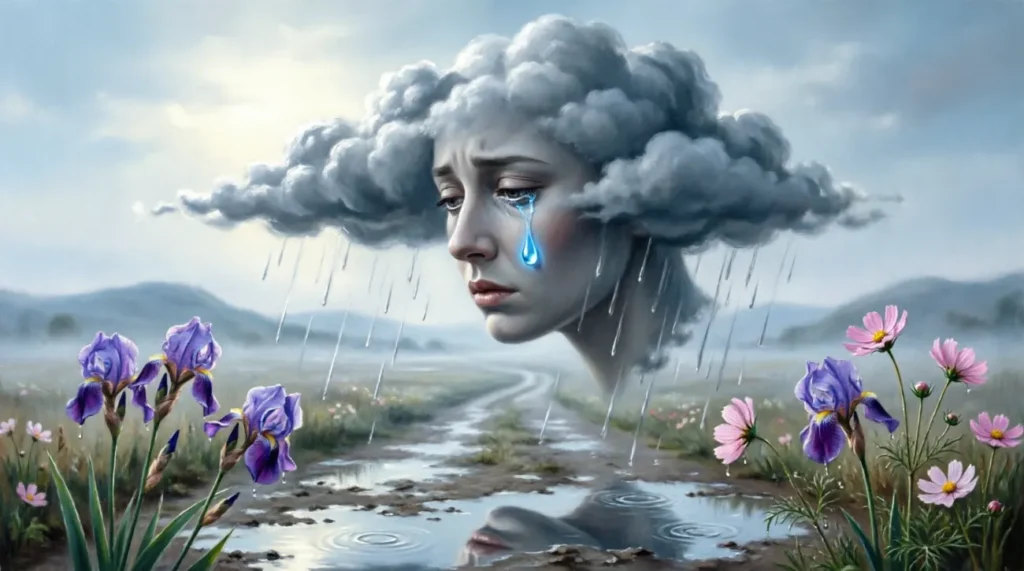
Meaning: Crying heavily and continuously.
Explanation: This simile compares someone’s tears to rain falling from a dark cloud.
Examples:
- She was crying like a rainy cloud after hearing the sad news.
- He sat by the window, crying like a rainy cloud.
2. Tears Falling Like Rain
Meaning: Tears are falling in large amounts.
Explanation: This common comparison shows a person crying heavily.
Examples:
- Her tears were falling like rain during the funeral.
- Tears fell like rain as he read the goodbye letter.
3. Crying Like a Broken Faucet
Meaning: Crying without seeming able to stop.
Explanation: A broken faucet keeps releasing water, just as someone may keep shedding tears.
Examples:
- After the movie ended, I was crying like a broken faucet.
- She started crying like a broken faucet when she heard the story.
4. Tears Like a Flowing River

Meaning: Tears are flowing freely.
Explanation: A river keeps moving, making this a strong image for nonstop tears.
Examples:
- Tears flowed like a river down her cheeks.
- His tears ran like a flowing river after the loss.
5. Crying Like a Baby
Meaning: Crying openly and emotionally.
Explanation: This simile describes loud or uncontrolled crying.
Examples:
- He was crying like a baby after saying goodbye.
- I cried like a baby when my favorite character died.
6. Tears Sparkling Like Raindrops
Meaning: Tears are visible and shining.
Explanation: This comparison focuses on how tears look rather than how loudly someone cries.
Examples:
- Tears sparkled like raindrops in her eyes.
- His tears shone like raindrops under the light.
7. Crying Like a Storm
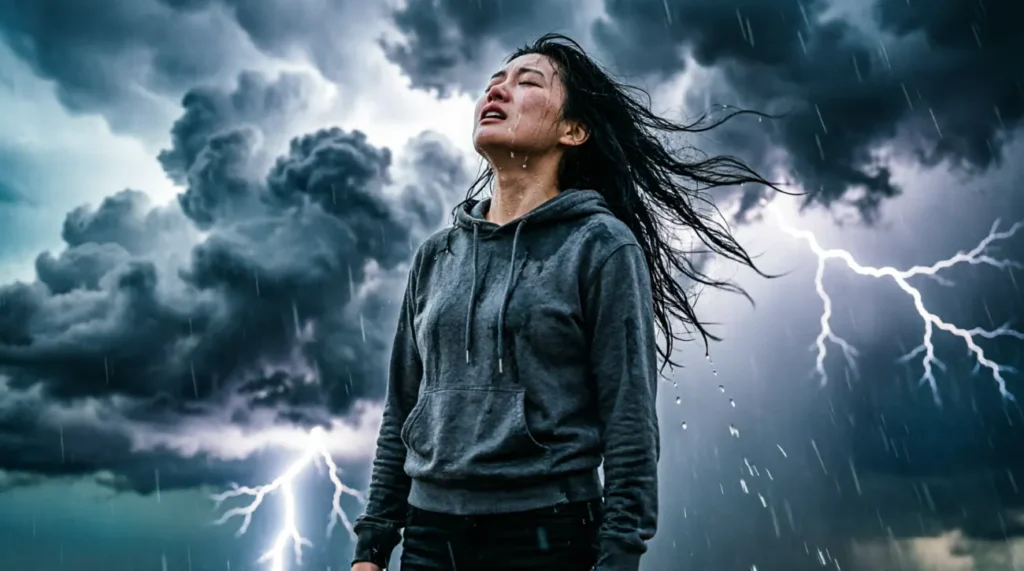
Meaning: Crying with great emotional force.
Explanation: A storm can be powerful and overwhelming, just like intense crying.
Examples:
- She was crying like a storm after the argument.
- He cried like a storm when everything became too much.
8. Tears Rolling Like Little Pearls
Meaning: Tears roll gently down the face.
Explanation: This simile compares tears to small pearls because both can look round and shiny.
Examples:
- Little tears rolled like pearls down her cheeks.
- Her tears fell like tiny pearls onto her dress.
9. Crying Like the Sky Is Falling

Meaning: Crying as if something terrible has happened.
Explanation: This creates a dramatic picture of extreme sadness or fear.
Examples:
- He was crying like the sky was falling.
- She cried like the sky was falling after the accident.
10. Tears Pouring Like a Waterfall
Meaning: Crying very heavily.
Explanation: A waterfall releases a large amount of water, making it a strong image for many tears.
Examples:
- Tears poured like a waterfall from her eyes.
- He cried until his tears came like a waterfall.
11. Crying Like a Lonely Child
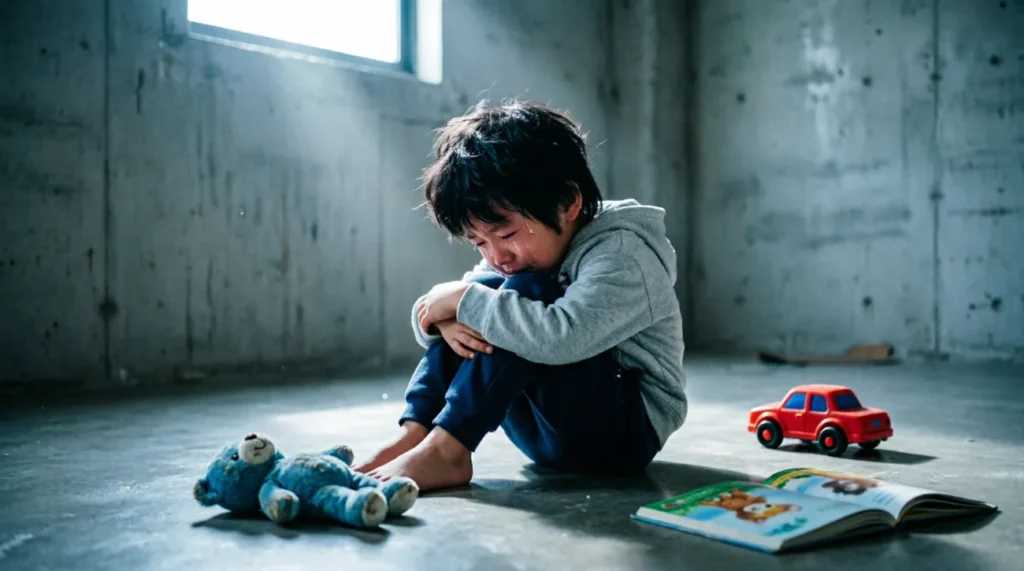
Meaning: Crying with deep loneliness or sadness.
Explanation: This simile gives the reader a feeling of isolation and vulnerability.
Examples:
- She cried like a lonely child in the empty room.
- He sat alone, crying like a lonely child.
12. Tears Falling Like Autumn Leaves
Meaning: Tears fall slowly and gently.
Explanation: Falling leaves create a quiet, sad image that works well in emotional writing.
Examples:
- Her tears fell like autumn leaves.
- Tears dropped like autumn leaves as she remembered him.
13. Crying Like a Wolf in the Night
Meaning: Crying with a lonely or haunting feeling.
Explanation: The image of a wolf calling at night creates a strong sense of loneliness.
Examples:
- He cried like a wolf in the night.
- Alone in the dark, she cried like a wolf calling for its pack.
14. Tears Like Melting Snow
Meaning: Tears slowly appear and disappear.
Explanation: Melting snow suggests something delicate and gradual.
Examples:
- Her tears were like melting snow on her cheeks.
- The tears disappeared like melting snow in the warm sun.
15. Crying Like a Broken Heart
Meaning: Crying because of deep emotional pain.
Explanation: This simile connects visible tears with the feeling of heartbreak.
Examples:
- She was crying like a broken heart after the breakup.
- He cried like a broken heart after losing his friend.
16. Tears Running Like a Stream
Meaning: Tears move continuously down the face.
Explanation: A stream flows steadily, just like tears can flow down someone’s cheeks.
Examples:
- Tears ran like a stream down her face.
- His tears flowed like a quiet stream.
17. Crying Like the Ocean Is Inside You
Meaning: Feeling overwhelmed by sadness.
Explanation: The huge size of an ocean represents powerful emotions.
Examples:
- She cried as if the ocean were inside her.
- He felt as though an ocean of sadness was pouring from his eyes.
18. Tears Falling Like Silver Drops
Meaning: Tears look bright or shiny as they fall.
Explanation: This poetic simile focuses on the appearance of tears.
Examples:
- Silver tears fell like drops of rain.
- Her tears looked like silver drops in the moonlight.
19. Crying Like a Flooded River
Meaning: Crying uncontrollably.
Explanation: A flooded river suggests an overwhelming amount of water and emotion.
Examples:
- She cried like a flooded river after the terrible news.
- His emotions burst out, and he cried like a flooded river.
20. Tears Dripping Like a Leaky Roof
Meaning: Tears fall slowly but steadily.
Explanation: A leaky roof keeps dropping water, creating an image of repeated tears.
Examples:
- His tears dripped like water from a leaky roof.
- She sat quietly, her tears falling like drops from a leaky roof.
21. Crying Like a Heavy Rainstorm
Meaning: Crying intensely for a long time.
Explanation: A heavy rainstorm gives the reader a strong image of nonstop tears.
Examples:
- She cried like a heavy rainstorm after the goodbye.
- He was crying like a rainstorm that would not end.
22. Tears Falling Like Dew
Meaning: Crying softly and gently.
Explanation: Dew is delicate and quiet, so this simile suits a soft emotional moment.
Examples:
- Tears rested on her cheeks like morning dew.
- Her eyes filled with tears like dew on fresh grass.
23. Crying Like a Candle in the Rain
Meaning: Crying while feeling weak or vulnerable.
Explanation: A candle struggling in rain creates an image of something fragile.
Examples:
- She stood crying like a candle in the rain.
- He felt fragile, crying like a candle in a storm.
24. Tears Falling Like Broken Glass
Meaning: Crying because of sharp emotional pain.
Explanation: Broken glass suggests hurt, danger, and emotional damage.
Examples:
- Her tears fell like broken glass after the betrayal.
- His tears felt like broken glass inside his heart.
25. Crying Like a Wounded Bird
Meaning: Crying with pain and helplessness.
Explanation: A wounded bird suggests vulnerability and suffering.
Examples:
- She cried like a wounded bird after the accident.
- He sounded like a wounded bird as he cried.
26. Tears Flowing Like a Spring
Meaning: Tears flow naturally and freely.
Explanation: A spring provides a steady source of water, making it a gentle comparison.
Examples:
- Her tears flowed like a spring.
- Tears came like a spring when she remembered her mother.
27. Crying Like a River in Flood
Meaning: Crying with overwhelming emotion.
Explanation: A flooded river represents emotions that are difficult to control.
Examples:
- He cried like a river in flood.
- Her tears came like a river after the shocking news.
28. Tears Like Falling Stars
Meaning: Tears fall quickly and beautifully.
Explanation: Falling stars create a poetic image for tears moving down the face.
Examples:
- Her tears fell like stars across the dark night.
- Tears dropped like falling stars as he whispered goodbye.
29. Crying Like a Lost Soul
Meaning: Crying with deep sadness and confusion.
Explanation: A lost soul suggests someone who feels alone or unsure.
Examples:
- He wandered through the house, crying like a lost soul.
- She cried like a lost soul after losing her way.
30. Tears Pouring Like a Broken Dam
Meaning: Suddenly crying uncontrollably.
Explanation: When a dam breaks, water rushes out quickly. This represents emotions finally being released.
Examples:
- Her tears poured like a broken dam.
- Once he started talking, he cried like a broken dam had opened.
31. Crying Like the Clouds Were Weeping
Meaning: Crying with deep sadness.
Explanation: This poetic comparison connects human tears with rain from the clouds.
Examples:
- She cried like the clouds were weeping with her.
- He sat outside, crying as if the clouds were weeping too.
32. Tears Sliding Like Glass Beads
Meaning: Tears move smoothly down the face.
Explanation: Glass beads suggest small, smooth, shiny drops.
Examples:
- Tears slid like glass beads down her cheeks.
- His tears moved like tiny glass beads.
33. Crying Like a River That Won’t Stop
Meaning: Crying continuously.
Explanation: The comparison emphasizes that the tears seem endless.
Examples:
- She cried like a river that would not stop.
- He was crying like a river flowing through the night.
34. Tears Falling Like Soft Snow
Meaning: Crying quietly and gently.
Explanation: Soft snow creates a peaceful image rather than one of loud sadness.
Examples:
- Her tears fell like soft snow.
- Tears landed like snowflakes on her coat.
35. Crying Like a Thunderstorm
Meaning: Crying loudly and powerfully.
Explanation: Thunderstorms are loud and intense, making this useful for strong emotions.
Examples:
- He cried like a thunderstorm after the argument.
- Her sobs were loud, like a thunderstorm in the night.
36. Tears Like Rain on a Window
Meaning: Tears slowly cover the face.
Explanation: Raindrops moving down glass create a clear visual picture.
Examples:
- Tears ran down her face like rain on a window.
- His tears moved like rain sliding down glass.
37. Crying Like a Broken Record
Meaning: Repeating the same sadness or complaint again and again.
Explanation: A broken record repeats the same sound, so this simile can describe repeated emotional crying or words.
Examples:
- She kept crying like a broken record about what happened.
- He was like a broken record, crying over the same mistake.
38. Tears Falling Like Water From a Tap
Meaning: Tears keep coming steadily.
Explanation: This simple image makes the action easy to understand.
Examples:
- Her tears fell like water from a tap.
- He sat quietly while tears dropped like water from a tap.
39. Crying Like a Child Lost in the Crowd
Meaning: Crying because of fear, loneliness, or helplessness.
Explanation: A lost child gives a strong image of vulnerability.
Examples:
- She cried like a child lost in a crowd.
- He felt alone and cried like a lost child.
40. Tears Shining Like Diamonds
Meaning: Tears appear bright and beautiful.
Explanation: Diamonds are bright and sparkling, so this creates a poetic image.
Examples:
- Her tears shone like diamonds beneath the light.
- Tears sparkled like diamonds in his eyes.
41. Crying Like the Rain Will Never End
Meaning: Crying for what feels like an endless time.
Explanation: The endless rain represents sadness that seems impossible to stop.
Examples:
- She cried like the rain would never end.
- He sat there crying as if the rain would never stop.
42. Tears Flowing Like a Waterfall
Meaning: Crying heavily and freely.
Explanation: A waterfall gives the reader an image of powerful, continuous movement.
Examples:
- Tears flowed like a waterfall down her face.
- He cried until his tears ran like a waterfall.
43. Crying Like a Bird in a Cage
Meaning: Crying because of feeling trapped or helpless.
Explanation: A bird in a cage suggests someone who wants freedom but cannot escape.
Examples:
- She cried like a bird trapped in a cage.
- He felt helpless, crying like a bird behind bars.
44. Tears Falling Like Morning Rain
Meaning: Crying softly and calmly.
Explanation: Morning rain gives the simile a quiet and gentle mood.
Examples:
- Her tears fell like morning rain.
- Tears came softly like rain at sunrise.
45. Crying Like a Storm Inside
Meaning: Feeling strong emotions even if the person looks calm outside.
Explanation: The storm represents emotional chaos inside the person.
Examples:
- She looked calm but was crying like a storm inside.
- He smiled outside while crying like a storm within.
46. Tears Rolling Like Tiny Rivers
Meaning: Many tears move down the cheeks.
Explanation: Each tear is compared to a small flowing river.
Examples:
- Tiny tears rolled like rivers down her cheeks.
- His face was wet with tears rolling like little rivers.
47. Crying Like the World Had Ended
Meaning: Crying because something feels extremely terrible.
Explanation: This dramatic simile shows intense sadness or shock.
Examples:
- She cried like the world had ended.
- He looked devastated, crying as if the world had ended.
48. Tears Falling Like Autumn Rain
Meaning: Crying in a quiet, sad way.
Explanation: Autumn rain often creates a calm and melancholy mood.
Examples:
- Her tears fell like autumn rain.
- Tears came down like cold autumn rain.
49. Crying Like a Song Without Music
Meaning: Crying in a way that expresses deep emotion.
Explanation: This poetic simile suggests sadness that cannot be expressed through ordinary words.
Examples:
- She cried like a song without music.
- His sobs sounded like a sad song without a melody.
50. Tears Flowing Like an Endless Stream
Meaning: Tears continue for a long time.
Explanation: An endless stream represents sadness that keeps flowing without stopping.
Examples:
- Her tears flowed like an endless stream.
- He cried quietly, his tears moving like an endless stream.
Practical Exercise: Test Your Simile Skills
Now it is your turn. Try these questions before looking at the answers.
Questions
1. Complete the simile:
Her tears fell like ______.
2. Which simile best describes heavy crying?
A. Tears like dry sand
B. Pouring like a waterfall
C. Tears like warm sunlight
3. Complete the sentence:
He was crying like a ______ after hearing the sad news.
4. What does “tears flowing like a river” mean?
5. Which simile suggests quiet crying?
A. Crying like a thunderstorm
B. Crying like a storm
C. Tears falling like soft snow
6. Complete the simile:
Her tears rolled down her cheeks like ______.
7. What feeling does “crying like a wounded bird” suggest?
8. Create your own simile using the word “tears.”
FAQs
1. Answer: Her tears fell like rain.
This compares tears to falling rain and suggests many tears.
2. Answer: B. Tears pouring like a waterfall.
A waterfall has a large, powerful flow of water, so it fits heavy crying.
3. Answer: He was crying like a baby.
This describes open and emotional crying.
4. Answer:
It means the tears are flowing freely and continuously, much like water moving through a river.
5. Answer: C. Tears falling like soft snow.
Soft snow creates a gentle and quiet image.
6. Answer: Her tears rolled down her cheeks like tiny rivers.
The comparison shows tears moving down the face.
7. Answer:
It suggests pain, helplessness, and vulnerability.
8. Sample answer:
Her tears sparkled like tiny stars.
This creates a visual and poetic image.
How to Use Similes in Your Writing
Knowing the meaning of similes is only the first step. The next step is learning when to use them.
First, think about the emotion you want your reader to feel. Is the character sad, heartbroken, lonely, scared, or relieved?
Then choose an image that matches that feeling.
For example, if your character is quietly sad, you might write:
Her tears fell like soft snow.
If the character is overwhelmed, you might write:
Her tears poured like a broken dam.
Notice how the two sentences create different moods. This is why creative writing similes are useful. They do not just describe an action. They help readers feel it.
You can also create your own similes. Think about things that flow, fall, break, shine, or disappear. Water, rain, rivers, storms, clouds, snow, and stars can all inspire interesting comparisons.
Try not to use too many similes in one paragraph. One strong simile is often better than several weak ones.
Tips for Creating Your Own Similes
Here are some simple steps you can follow:
1. Start with the emotion.
Ask yourself what the character feels.
2. Think of a matching image.
For sadness, you might think of rain, clouds, or a lonely road.
3. Add “like” or “as.”
For example: Her tears fell like rain.
4. Make the picture clear.
Choose an image your reader can easily imagine.
5. Keep it natural.
The best similes fit the sentence instead of feeling forced.
For example, instead of simply writing:
He cried.
You might say:
He cried like rain falling on an empty street.
The second sentence gives the reader a stronger image and mood.
Why Similes Make Writing Better
Similes make ordinary writing more interesting. They turn simple facts into pictures that readers can imagine.
Compare these two sentences:
She was crying.
Her tears fell like rain against the window.
The first sentence tells us what happened. The second helps us see it.
That is the main power of a simile.
They are especially useful in stories and poems because they can create mood quickly. A storm can suggest anger or emotional pain. Soft snow can suggest quiet sadness. A river can suggest tears that will not stop.
When you use simple sentences well, your writing becomes more colorful without becoming difficult to understand.
Conclusion
Similes are a simple but powerful way to make writing more vivid. Instead of saying that someone is crying, you can compare their tears to rain, rivers, waterfalls, snow, or other familiar things. These comparisons help readers picture the moment and understand the emotion.
The 50 similes for crying in this guide can give you ideas for stories, poems, essays, and creative writing. You can also use them as inspiration to make your own comparisons.
Remember, you do not need complicated words to write a strong simile. Start with a simple feeling, choose a clear image, and connect the two with “like” or “as.”
Now try creating a few of your own. With practice, you will find new and creative ways to make your writing more emotional, memorable, and fun to read.